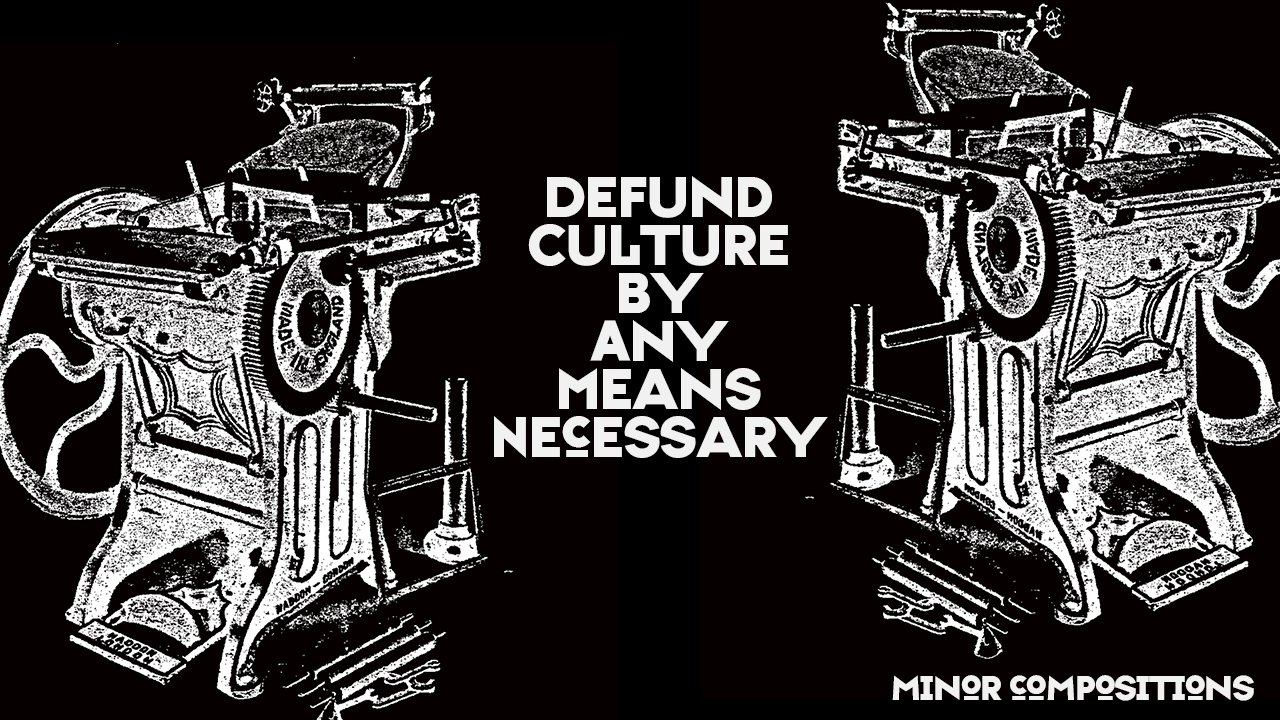
In this episode owe are joined by Gary Hall and Seth Wheeler for a wide-ranging conversation on cultural funding, radical publishing, and the changing conditions of collective knowledge production.The discussion begins with Gary Hall’s recent book Defund Culture, which challenges conventional calls to increase arts funding by asking a more fundamental question: what – and who – is cultural funding actually for? Rather than defending existing institutions, Hall proposes that the current crisis in arts funding might be an opportunity to rethink the entire landscape, redistributing resources away from entrenched, upper-middle-class infrastructures toward more collective, plural, and relational forms of cultural production.
From there, the conversation moves into the practical and political challenges of radical publishing today. Reflecting on projects such as Open Humanities Press and Agit Press, Hall and Wheeler discuss the tensions between openness and enclosure in contemporary publishing, the uneven realities of open access, and the difficulty of sustaining collective, non-commercial forms of intellectual work. Wheeler draws on experiences from worker movements to highlight the historical role of print media – newsletters, pamphlets, and leaflets – as machines to produce consciousness, capable of expanding political dialogue beyond academic and activist enclaves.How do these earlier forms resonate with, and diverge from, today’s digital platforms? What happens when knowledge production becomes entangled with the logics of content creation, personal branding, and algorithmic visibility? The conversation explores how financial precarity and platform economies shape what can be said, by whom, and under what conditions: raising questions about whether genuinely collective and autonomous forms of media can exist within, or beyond, these systems.
Ultimately this is a question of infrastructure: how to build alternative networks for producing and distributing knowledge that do not simply replicate existing hierarchies. From decentralized publishing models and cooperative platforms to the enduring importance of print as a social and organizational process, the episode maps out both the challenges and the possibilities of creating new cultural forms grounded in collaboration, redistribution, and shared intellectual life. Rather than offering definitive solutions, this conversation opens up a space for thinking through what it might mean to defend/defund culture by transforming it – experimenting with new modes of publishing, new institutional arrangements, and new ways of working together.
Intro / outro music – Mischief Brew, The Reinvention of the Printing Press