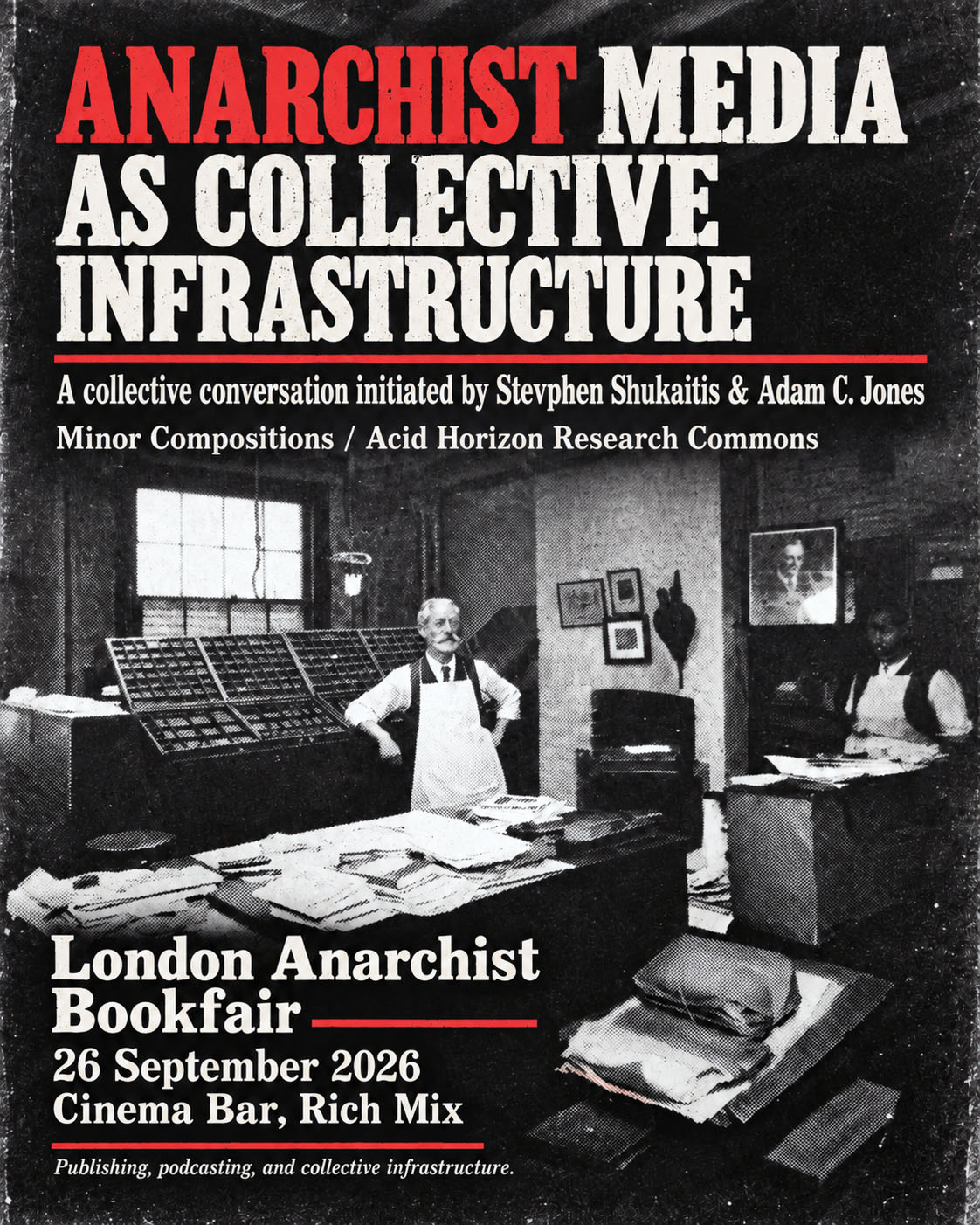
12:45 – 13:45 @ the London Anarchist Bookfair, September 26th, Cinema Bar in Richmix
What if anarchist media were understood not simply as producing books, magazines, podcasts or online content, but as part of the infrastructure through which people meet, think, organise and act together? Taking ideas around publishing as collective infrastructure as a starting point, this participatory session will explore how anarchist media can create and sustain social spaces, reading groups, archives, events, technical resources, communities and enduring networks.
Following a couple of short provocations, the session will open into a collective discussion about the infrastructures that already exist, the problems different projects repeatedly encounter, and what resources, capacities or connections might be shared. Rather than asking what new organisation needs to be created, we will consider how existing projects might support one another more effectively and what could be sustained collectively that is difficult to sustain separately. The session is intended for publishers, podcasters, writers, designers, archivists, programmers, organisers and anyone interested in building autonomous forms of public life.
Guiding Questions
What do we already have?
What infrastructures, resources, relationships and capacities are already sustaining anarchist media?
What keeps breaking or being duplicated?
Where are projects isolated, dependent on commercial systems, overworked, or repeatedly solving the same problems? What forms of maintenance, care and often invisible labour are required to keep autonomous media infrastructures functioning, and how might that labour be better shared and recognised? How can we build infrastructures that survive burnout, turnover, lost passwords, disappearing websites, venue closures and platform changes?
What could we sustain together?
How might books, journals, podcasts, archives, websites and events become starting points for longer-term forms of study, organising and collaboration? How can anarchist publishing create publics without reproducing the exclusions, hierarchies and extractive practices of the media industries it opposes? What could be shared, connected or collectively maintained without building a new central organisation?